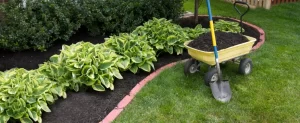
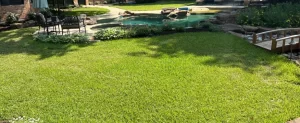
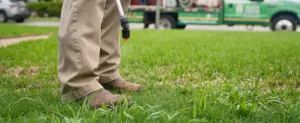
Winter brings unique stress to your lawn and landscape. With the right preparation, you can safeguard turf and plant health now and enjoy stronger results in spring. Water deeply before the ground freezes, apply 2 to 4 inches of mulch around shrubs and trees, rake leaves off the lawn, avoid heavy traffic on frozen turf, and wrap vulnerable plants. These steps tie directly into expert lawn fertilization and weed control services from Higher Ground Lawn Care & Lighting in the Dallas-Fort Worth area.
Why Winter Stress Matters for Turf & Plants
When temperatures drop and growth slows, your lawn and landscape become more vulnerable. Root systems and crowns of turf push into dormancy. Plant roots lose insulation. Wide temperature swings, frozen ground, and ice can damage cell structures. For cool-season turf, avoid applying fertilizer once the turf is fully dormant. Also, applying potassium in late fall can improve cold tolerance and root health.
Protecting both turf and plants now means fewer issues and faster recovery come spring.
For Your Lawn
Here are key steps you can take now:
1. Water before the freeze
Water your lawn deeply just before the ground freezes. Moist soil retains heat longer, giving the turf better insulation.
2. Rake fallen leaves and clear debris
Leaves and debris smother grass blades, reduce airflow, and can lead to disease when temperatures hover near or below freezing.
3. Limit traffic on frozen or brittle turf
When turf is frozen, it becomes brittle, and the soil compacts easily. Stay off the grass when possible. Heavy foot traffic can crush turf blades or roots and show up as bare patches in spring.
4. Know fertilization timing
For many grasses, winter fertilization is either unnecessary or should be very light and focused on root health (potassium) rather than top growth. For example, cool-season turf should not receive broad-leaf herbicide or nitrogen-rich fertilizer once dormant.
Pro Tip: A healthy lawn going into winter means fewer headaches when winter thaws and spring growth returns.
For Your Landscape: Shrubs, Trees & Plants
Your plants deserve attention now, too:
1. Apply mulch
Spread a 2 to 4 inch layer of mulch around the base of shrubs, trees, and perennials. Keep mulch away from direct contact with trunks to insulate roots and moderate soil temperature swings.
2. Water plants thoroughly before freeze-up
Just as turf benefits from pre-freeze watering, so do shrubs and trees. Moist soil holds heat better and gives roots a buffer against cold.
3. Protect tender plants with covers
Wrap vulnerable plants or tent them with frost cloth or burlap. Ensure the covering does not lie directly on leaves, which can freeze, and secure it so wind doesn’t blow it off.
4. Prune strategically (late dormant season)
Prune dead and broken branches in the late dormant season so trees and shrubs face fewer risks from snow or ice load. Avoid heavy cuts in early fall that might stimulate new growth vulnerable to frost.
How Fertilization Services Fit In
When done properly, fertilization supports winter stress protection:
A turf nutrient analysis (via soil tests) ensures your lawn has what it needs before dormancy.
A well-timed late-fall application of root-strengthening nutrients, especially potassium, helps turf weather winter better.
Weed control and top dressing can support healthier turf leading into dormancy.
By pairing these steps with protective measures, you help your lawn and landscape enter winter strong and wake up in spring ready.
Ready to safeguard your lawn and landscape this winter?
Contact Higher Ground Lawn Care & Lighting today at (214) 531-3369 or fill out our online form to schedule a pre-winter service. Let us help you stay ahead of winter stress with expert lawn fertilization and lighting services that give your outdoor space the robust start it deserves next spring. Serving Dallas, Fort Worth, and nearby areas.
Not finding exactly what you need? Contact us today for custom lawn care and outdoor solutions made just for you. We’re here to help your property thrive with service, care, and excellence.